Sunsari Sept. 27: Residents along the Saptakoshi Riverside are gripped by fear as the river’s water flow continues to fluctuate. Since last week, fluctuating water levels have left residents in settlements near the embankments anxious.
In line with the Department of Hydrology and Meteorology’s forecast of heavy rainfall in parts of eastern Nepal, rain began falling in various areas, including the eastern hilly regions, on Wednesday evening.
The subsequent rise in the Saptakoshi’s water flow has further heightened concerns among riverside residents. “Sometimes the flow reaches 200,000 cusecs, and at other times it exceeds 300,000 cusecs. Such constant fluctuations keep those of us living by the river in a state of perpetual fear,” said 60-year-old Bir Bahadur Karki from Prakashpur, Barahakshetra-10.
Police have been using loudspeakers to alert locals about potential risks as the river’s flow increases. Inspector Bikram Bahadur Bhattarai stated that a team from the Area Police Office, Mahendranagar, has been making announcements, covering the route from the Koshi Bridge through Chakraghatti and Mahendranagar to the Koshi Corridor and riverside settlements, urging residents to stay safe and remain vigilant. Police conducted these announcements in the Prakashpur area around 6:30 AM on Saturday, urging locals to prioritize their safety and guard against potential hazards amidst the rising river flow and the forecast of heavy rain.
Tek Kumari Basnet, a 62-year-old resident of Barahakshetra-10, said that hearing the police making public announcements via loudspeakers reminded her of past flood incidents.
“I wonder if we’ll get swept away this time; the police have already started making announcements,” she said. With the rising flow of the Saptakoshi River, Barahakshetra Municipality has initiated preparedness measures in anticipation of potential disaster risks.
A meeting on disaster management was held in the presence of Mayor Ramesh Karki, involving representatives from the Nepal Police, Armed Police Force, Nepal Electricity Authority, the Health Section, the Red Cross, and the business community to discuss managing potential risks.
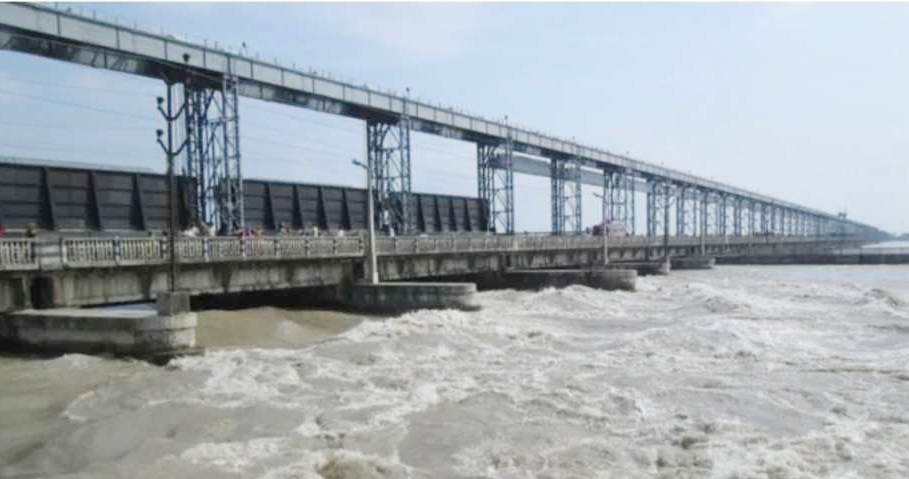
According to the Koshi Barrage Control Room, the water flow at the barrage was measured at 316,795 cusecs per second at 6:00 AM on Saturday. At the same time, the flow at the Chatara Koshi Bridge area was recorded at 243,700 cusecs per second.
The control room reported that 43 sluice gates of the Koshi Barrage were opened at 6:00 AM on Saturday due to the high water flow. As the water levels fluctuate, residents living along the banks of the Koshi are keeping a close watch on the river’s condition. Resident Bimal Timsina noted that the changing flow of the river has heightened interest and anxiety among the locals. It is reported that the rising water flow has also increased pressure on the river’s eastern embankment, specifically around spurs numbered 26:40 and 26:78 in the Rajabas area.
Residents of various settlements in Koshi Rural Municipality, spanning areas from Prakashpur, Madhuban, and Pashchim Kushaha to Laukahi, as well as those living near the Indian border, are closely monitoring the river’s condition.
Locals still vividly recall the incident on August 18, 2008 (Bhadau 2, 2065 BS), when the Saptakoshi River breached the embankment in the Pashchim Kushaha area and flooded the settlements.
On that day, at 12:58 PM, the river surged into the settlement after eroding spurs numbered 12:10 and 12:18. At the time, the river’s flow was 167,000 cusecs. Fears among Koshi Corridor residents have been further heightened by the recent glacial flood event in the Bhotekoshi region of Rasuwa. Resident Bimal Timsina notes that while the Koshi’s flow used to subside towards August 26, it has continued to rise even after the onset of the month of September.