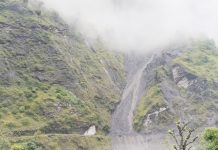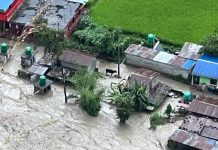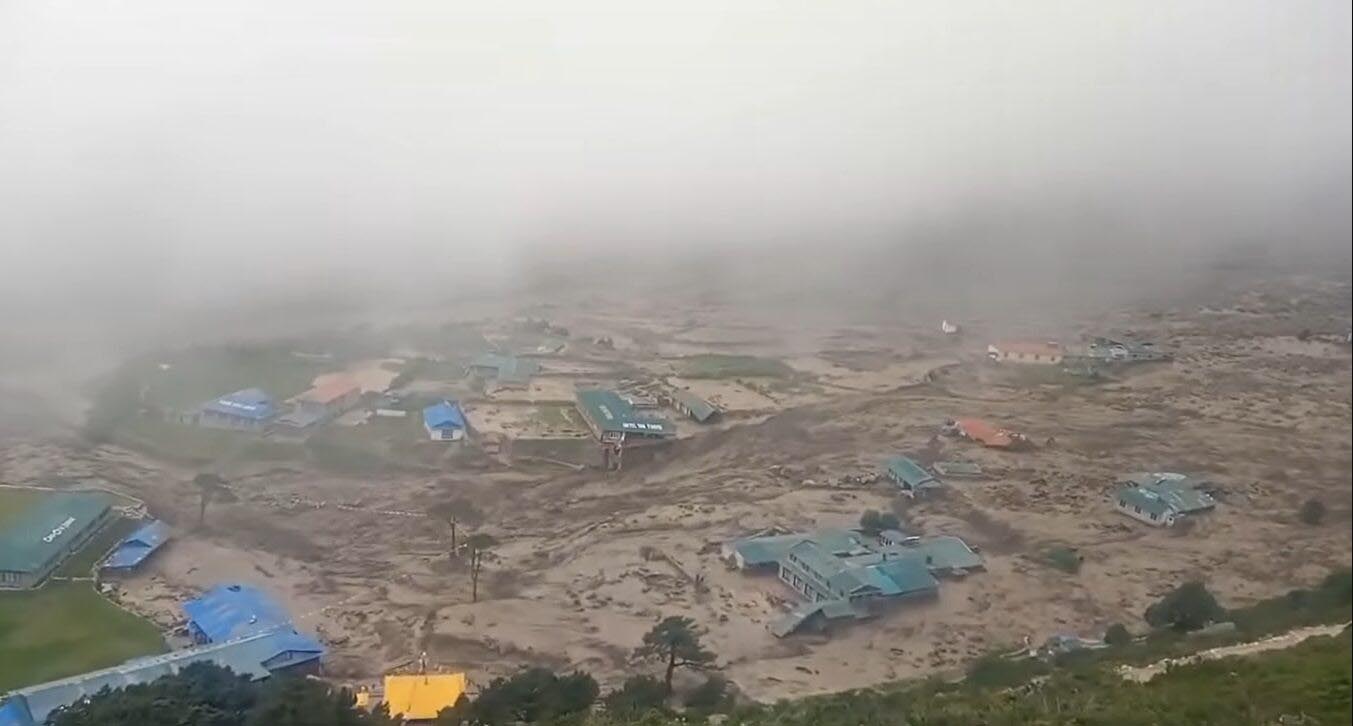
Solukhumbu: A devastating flash flood struck the Thame region of Solukhumbu district on Friday, August 16, 2024, causing widespread destruction and significant disruption to both local communities and the region’s tourism industry. Triggered by the sudden outburst of a glacial lake, the flood has left a trail of devastation, washing away homes, infrastructure, and vital trekking routes.
Impact on Communities and Infrastructure
The flood, which tore through Khumbu Pasang Lhamu Rural Municipality-5, destroyed 20 houses, including hotels, a health post, and a school. The entire village of Thame has been reduced to a mass of debris, with 100 residents displaced by the disaster. Among the displaced, 93 people were rescued by a joint team of the Nepali Army and Nepal Police and are currently being sheltered in a house behind the Army camp, while 42 others have taken refuge in a local community building.
The flood also inflicted severe damage on the region’s infrastructure, including the footpath along the popular tourist route from Phakding to Namche. The trail was damaged in two places over a stretch of 100 meters, and a crucial bridge was destroyed, effectively cutting off the lower Everest region from the rest of the district. The Bhotekoshi River further eroded the only remaining footpath to the Everest trail, exacerbating the disruption to the region’s trekking routes.
Response and Relief Efforts
In response to the disaster, the flood-affected households have been provided with monetary assistance, receiving Rs 50,000 from local authorities and an additional Rs 15,000 from the District Disaster Rescue Committee. Defense Minister Man Bir Rai, along with Sonam Sherpa, Chairperson of the Federalism Strengthening and National Concern Committee, visited the affected area to oversee the relief efforts and direct local authorities to carry out rescue and relief operations effectively.
Future Risks and Calls for Action
The flood was caused by the outburst of one of the four glacial lakes in the area, a phenomenon that experts warn could become increasingly common due to the effects of climate change. Lawmakers and local leaders have called for a coordinated response from all levels of government to address the immediate needs of the displaced residents and to take steps towards their safe relocation.
With the region’s connectivity severely impacted and the popular “Three Pass” trekking route now inaccessible, the disaster has not only affected the local population but also threatens the region’s tourism industry, a crucial economic lifeline for the area. Efforts are now focused on restoring the damaged routes and providing ongoing support to those affected by the flood.
As the situation continues to evolve, the authorities are closely monitoring the other glacial lakes in the region to prevent further disasters and are urging the international community to support Nepal in addressing the impacts of climate change in the Himalayas.
Conclusion
The Thame flash flood has underscored the vulnerability of Nepal’s mountainous regions to climate-induced disasters. As rescue and relief operations continue, the focus now shifts to rebuilding the community and mitigating future risks. The government’s swift response and the cooperation of local and national agencies offer hope for the affected families as they begin the long process of recovery.