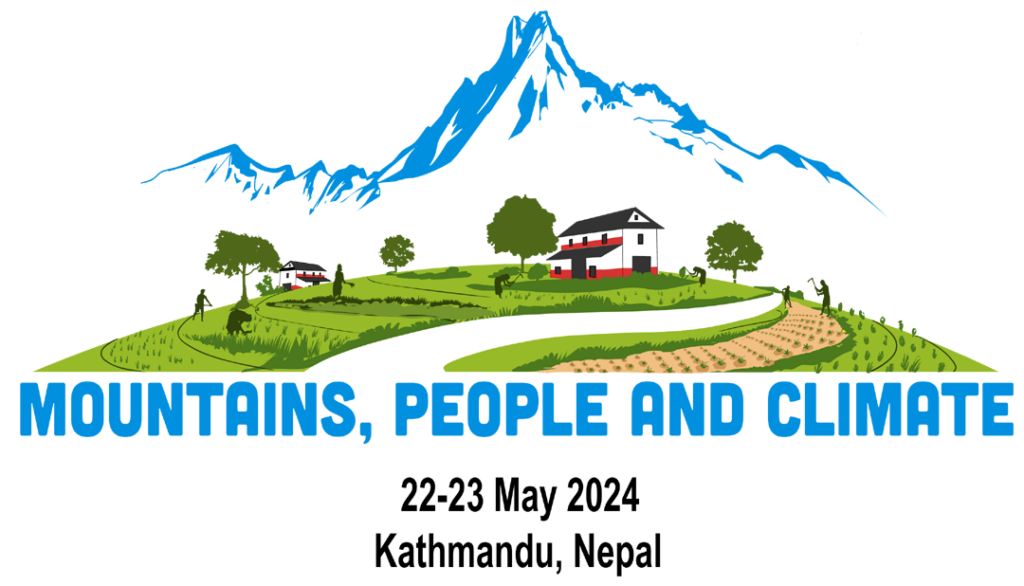
Kathmandu. The preparations for the international dialogue on mountains and climate change, which Nepal started organizing for the first time, are almost complete.
he Ministry of Forestry and Environment has informed that the preparation of the press conference, which is being organized with the aim of informing the international world about the effects, damage and effects of climate change on the Himalayan countries, has reached its final stage. According to Joint Secretary of the Ministry Dr. Maheshwar Dhakal, government high officials, scientists, researchers and experts from high mountain countries as well as island countries will participate in the dialogue.
According to him, the participation of the environment ministers of Bangladesh, Bhutan, Kyrgyzstan and other countries has been confirmed, while the participation of the special envoys of the ministers and heads of government of the rest of the countries is in the process of being confirmed.
The President of Kyrgyzstan will send his special envoy to the program. So far, it has been confirmed that 23 countries will officially participate, including island countries and high mountain countries, and other countries that closely monitor the issue of mountains.
Joint Secretary Dr. Dhakal told Nepalkatha that the process of ensuring participation is still going on. Looking at the status of the confirmation so far, at least 60 international dignitaries, experts and scientists will participate.

Maheshwar Dhaka
Nepal has started this communication to maintain a common understanding among all the Himalayan countries and to take national and international initiatives to solve the problems of the Himalayan region. The Special Envoy of the Secretary General of the United Nations will also participate in the dialogue to be held on 12th and 23rd of Baisakh in Chandragiri, Kathmandu.
Similarly, high-ranking representatives of Mountain Partnership will show active participation throughout the program. The conversation has started focusing on nine different topics.
Climate science and view of impact in the Himalayan region (Climate Science and Mountain Evidence), Solution point in the Himalayan region: Common understanding and real ground (Mountain Solutions: Common Grounds and Understandings), Concept of the Himalayan region: as an opportunity and resource (Mountain Prospectives: Resources and opportunity) experts and scientists will present working papers and discuss them.
Since 2009, Nepal has been raising the issue of the impact of climate change on the ecological system, people’s life and biodiversity of the Himalayan region in the international forum. The International Conference on Climate Change (COP-28) held in Dubai last year decided to address the climate crisis in the Himalayan region for the first time.
The 60th meeting of the Scientific and Technical Consultative Body (SBSTA) under the United Nations Framework Convention on Climate Change (UNFCCC) had also given instructions to hold an expert discussion on mountains and climate.
Dr. Dhakal said, “Nepal government had no special plan for such a program. The Ministry of Forestry has started the work as it can be done, with the support of all the well-wishing national and international organizations, this ambitious work of establishing the agenda not only for Nepal but for all mountain countries has started getting meaningful.